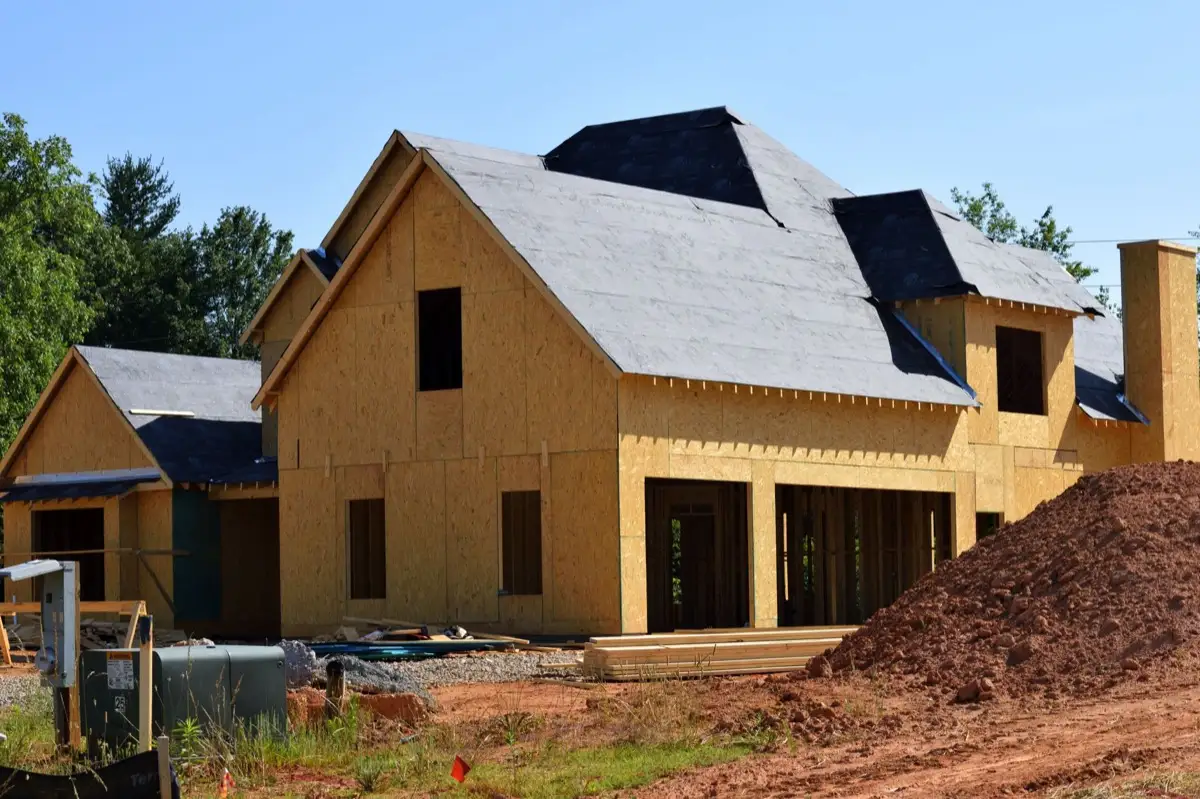
A roof is priced by the square — 100 square feet of roof surface — and the total is mostly decided before anyone picks a shingle color. Pitch, size, layers, decking and flashing set the number. The brand on the bundle is a smaller variable than most people expect.
Here is the uncomfortable part of roof pricing. The three items that swing a bid the hardest are the three that a low bidder quietly leaves out.
What actually drives the number
Squares, not square feet. A 2,000 square foot house is not a 2,000 square foot roof. Slope and overhangs add surface, so the same floor plan can come in at 22 squares or 30 depending on pitch. Measure the roof, not the house.
Pitch. Under about 7:12 a crew walks the roof normally. Past that they are setting roof jacks, staging bundles and working in harnesses, and production per hour drops. Above roughly 9:12 the labor line stops being proportional and starts being a different job.
Tear-off layers. One layer comes off fast. Two layers is double the labor, double the dumpster and often double the disposal fee, and the fee is by weight.
Decking condition. Nobody knows this until the old roof is off. Deteriorated sheathing around chimneys, valleys and any old leak gets replaced, and that has to be a stated per-sheet price in the contract.
Flashing. Sidewall, chimney, valley, pipe boots, step flashing. New flashing costs money. Reused flashing costs money later.
Complexity. Every valley, dormer, saddle, skylight and penetration is hand work. A simple gable and a cut-up hip roof of the same square footage are not the same bid.
The line items worth paying extra for
Some upgrades are marketing. These four are not.
Balanced ventilation. Intake at the soffit, exhaust at the ridge, sized to the attic. A shingle roof over a stagnant 150-degree attic loses years off its rated life from the underside. This is the single most-skipped item in the trade and it is why roof ventilation is a line on our scope sheets rather than an afterthought.
Ice-and-water membrane at eaves, valleys and penetrations. In any climate that freezes, this is the difference between a wet ceiling in February and nothing happening.
All new flashing. Not reused, not caulked. Step flashing woven into the courses at sidewalls, and a real chimney counterflashing rather than a bead of sealant.
A written workmanship warranty with a stated number of years. Manufacturer warranties cover the shingle, which almost never fails first. Installation is what fails first.
What is usually not worth it
A 50-year shingle on a house you will sell in eight. You are prepaying for service life you will hand to a stranger.
Premium designer shingles chosen from a two-inch sample. Look at a full board in daylight on your own wall, or better, at an installed roof three streets over. Color reads completely differently at scale.
Ridge vent added without opening the intake. A ridge vent with no soffit intake pulls its makeup air from inside the house through ceiling penetrations. That is worse than no vent. If the soffits are stuffed with insulation, fix that first or skip the ridge vent.
How to read three bids that look nothing alike
Build a one-page scope sheet and make every bidder fill in the same rows.
| Line item | What to require in writing |
|---|---|
| Squares and pitch | Their measurement, stated |
| Tear-off | Number of layers assumed |
| Decking | Per-sheet replacement price |
| Underlayment | Product, plus ice-and-water locations |
| Flashing | New at every location, itemized |
| Ventilation | Intake and exhaust, net free area |
| Pipe boots | New, not reused |
| Warranty | Workmanship years, in writing |
| Cleanup | Magnetic sweep, dumpster placement |
| Permit | Who pulls it, whose cost |
Once the rows match, the totals become meaningful. Before that, the cheapest bid is usually just the one that assumed the least.
The signals that a low bid is hiding something
A number well under the others is information, not a bargain. Look for these tells.
No decking line. Reused flashing, or the word "caulk" doing structural work. No permit. A large deposit demanded before material delivery. No proof of workers' compensation coverage, which is the one that leaves you personally exposed if somebody falls. And a start date tomorrow in a market where everyone else is three weeks out.
When you should not replace at all
We turn down replacement work regularly. A roof with fifteen good years on it and one bad valley needs a valley, not a re-roof. A single failed pipe boot is a sixty-dollar part and an hour of labor, and it produces exactly the same ceiling stain as a dying roof.
A roof inspection that ends in "not yet, call us in four years" is a completely normal outcome. We would rather deliver that than sell a roof early.
The one exception worth naming: if you are inside two or three years of needing a re-roof anyway and you are also about to spend real money on repairs, do the roof. Paying twice for the same access to the same surface is how people end up over budget.
Bottom line
Get three bids on one written scope. Insist on a per-sheet decking price, new flashing everywhere and balanced ventilation. Ignore shingle brand marketing and spend the upgrade money on the assembly underneath. Then pick the contractor whose scope sheet came back most complete, which is usually not the cheapest one and is almost never the most expensive one either.
Sierra Vista Roof Pros prices roof replacement, asphalt shingle roofs and roof inspections across Sierra Vista and Cochise County and the San Pedro Valley, itemized so you can compare it against anyone else's. Call (844) 511-2320 and we will measure the actual roof, including telling you if it can wait.
Ready for a free quote in Sierra Vista?
Sierra Vista Roof Pros — free estimate, clear scope, no pressure. Use the form on this page or jump to the homepage quote.
Related services in Sierra Vista
Sierra Vista Roof Pros money pages — go straight to the service you need.
- Roof Replacement →
A reroof is decided twice. Once on paper, and once at about ten in the morning on tear-off day, when the old covering comes off and everybody standing in the driveway finally sees the deck.
- Roof Inspections →
This is the page where we talk you out of buying something. The Army maintains a roof condition database for its buildings, schedules infrared moisture surveys on low-slope assemblies, and re-scores every roof on a fixed cycle.
- Asphalt Shingle Roofs →
Shingles at 4,633 feet age differently than shingles anywhere humid. There is no algae here, almost no moss, and little of the slow biological breakdown that kills roofs in the southeast.
- Roof Leak Repair →
Sierra Vista leaks on a schedule. Roughly four and a half inches of rain arrives in July and about a tenth of an inch arrives in May, so a defect can sit wide open for nine months without producing a single drop on your ceiling.
- Storm Damage Restoration →
A monsoon cell over the San Pedro Valley is small. It can soak one subdivision, drop hail on four streets, and leave the neighborhood a mile east completely dry.
Frequently asked questions
How is roof replacement priced?
By the square, which is 100 square feet of roof surface, not floor area. A 2,000 square foot house with a moderate pitch usually has somewhere around 22 to 30 squares of roof once you account for slope and overhangs. That is why two houses with identical floor plans and different roof pitches get meaningfully different bids, and why anyone quoting a price over the phone from your address alone is guessing.
Why do roof replacement quotes vary so much?
Usually because they are not the same scope. The three items that move a bid most are tear-off layers, decking replacement and flashing. A low bid frequently means one layer of tear-off assumed, no decking allowance and reused flashing. Put every bid on the same scope sheet before you compare the totals, because otherwise you are comparing two different jobs.
Does a steeper roof cost more to replace?
Yes, for two reasons. There is more surface area than the footprint suggests, and above roughly 7:12 the crew needs staging, roof jacks and fall protection that slow the work down considerably. Anything past about 9:12 is walk-with-equipment territory and the labor rate reflects it. Very low slope is its own premium because the material changes entirely.
How much should I budget for decking replacement?
Ask for it as a stated per-sheet price rather than a lump allowance, because nobody knows the decking condition until the old roof is off. Some roofs need zero sheets and some need twenty. A bid with no decking line item is not a cheaper bid, it is a bid with a change order waiting inside it.
Is a roof replacement covered by insurance?
Insurance covers sudden damage from a covered peril such as hail, wind or a fallen limb. It does not cover a roof that reached the end of its service life, and most policies now settle older roofs at actual cash value rather than replacement cost, which means depreciation comes out of the check. Age of roof and cause of failure are the two things an adjuster is deciding.
How long does a roof replacement take?
A typical single-family asphalt re-roof is one to three days of actual work once the crew is on site. Steep, complex, multi-layer or large roofs run longer, and weather stops everything. The scheduling lead time before that is usually the longer part, especially in the weeks after a regional storm when every crew in the market is booked.
Local context
How this applies in Sierra Vista, AZ
Every article here is written from roofing work done in Sierra Vista and Cochise County and the San Pedro Valley, so the numbers reflect local labour, permit and material costs rather than a national average. Your own job can land either side of them depending on access, the condition of what is already there, and the materials you pick — a half-inch-per-foot fall built into the structural deck, glass-mat gypsum cover board laid under the membrane, mesh-reinforced elastomeric coating used to extend service life.
The way to turn any of this into a real answer is to have someone look at your actual situation. The free estimate is free, itemized and written down, with no deposit and no obligation. Call (844) 511-2320 or start on the Sierra Vista Roof Pros homepage.
Areas Sierra Vista Roof Pros covers
Sierra Vista first, then the surrounding communities of Cochise County and the San Pedro Valley. Each has its own page with local detail rather than a copy of this one:
- Sierra Vista Southeast, AZ — Cochise County, population 14,428
- Whetstone, AZ — Cochise County, population 3,236
- Huachuca City, AZ — Cochise County, population 1,626
- Palominas, AZ — Cochise County, population 222
- Bisbee, AZ — Cochise County, population 4,923
- Douglas, AZ — Cochise County, population 16,534
Or jump to the full list of Sierra Vista services.
More from the Sierra Vista Roof Pros blog
- Roof Inspection Cost in Sierra Vista: What You Get for the Money
A real roof inspection produces a photographed, slope-by-slope report. Here's what one costs in Sierra Vista, AZ, and how to tell it from a sales visit.
- Metal Roof vs Shingles in Sierra Vista: The Honest Comparison
Metal costs roughly two to three times what asphalt does and lasts two to three times as long. Here's when that math works in Sierra Vista, AZ, and when it doesn't.
- How to Find and Fix a Roof Leak in Sierra Vista
Water rarely enters where the stain appears. Here's how to trace a roof leak in Sierra Vista, AZ, what you can fix yourself, and what needs a roofer.
The Sierra Vista Roof Pros Team
Licensed roofing pros in Sierra Vista, AZ
Written by the Sierra Vista Roof Pros team — licensed, insured roofing pros serving Sierra Vista, AZ and the surrounding area.